





CABINET NEWS KENYA 2025
On 15th, 2025, the Cabinet chaired by President William Ruto
, sat and ratified as follows:
- The cabinet approved a KSh5 trillion roadmap to transform Kenya into a first-world economy, anchored by two major financial institutions.
(a). The National Infrastructure Fund (NIF), as a limited liability company.
Will serve as the central engine for aligning financial resources with national development priorities.
The goal, is to finance priority investments by unlocking large-scale private sector capital, hence reducing reliance on borrowing and taxation.
(b). Sovereign Wealth Fund (SWF) Policy-
Approved to establish a framework for the prudent management and investment of revenues from mineral and petroleum resources, public investment dividends, and a portion of privatisation proceeds.
The SWF will strengthen fiscal discipline, enhance resilience, and support long-term national competitiveness.
It operationalises Article 201 of the Constitution on intergenerational equity.
2. FOOD SECURITY:
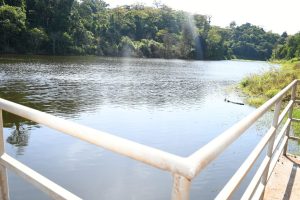
Construction of 50 mega-dams, 200 mini-dams, and over 1,000 micro-dams, bringing an additional 2.5 million acres into production.
- TRANSPORT & LOGISTICS:
Dualling of 2,500 km of highways and tarmacking of 28,000 km of roads.
Extension of the Standard Gauge Railway (SGR) to Malaba.
Expansion of regional oil pipelines and modernisation of airports and the ports of Mombasa and Lamu.
- ENERGY GENERATION:
A decisive scale-up of energy generation, adding at least 10,000 megawatts of new capacity over the next seven years from geothermal, hydro, solar, wind, and nuclear potential.
- ROADS PAYMENTS:
Noted that all pending bills for certified works and accrued interest in the Ministry of Roads, up to December 31, 2024, have been fully settled (KSh123 billion), which has unlocked or accelerated 875 road contracts since April 2025.
- POLICY APPROVALS:
(a). National Energy Policy – Approved to guide sector reforms, accelerate access to modern energy, promote renewables and private sector participation, and address low access, reliance on traditional biomass, and climate risks.
(b). National Petroleum Policy – Endorsed to update the outdated 2004 framework, aiming to strengthen governance, attract investment, enhance energy security, promote value addition and LPG uptake, and improve revenue management.
(c). National Care Policy – Endorsed to provide a coordinated framework for the care sector, promote gender equality and women’s empowerment by addressing unpaid care work, and improve service coordination.
7. SECURITY & PUBLIC SERVICE MODERNISATION:
(a). National Integrated Security Command and Control System – a structure approved to replace the current obsolete platform with an integrated, technology-driven architecture linking security agencies for real-time intelligence sharing.
(b). Second-Generation Smart Driving Licences – Approved for rollout under a public-private partnership, integrating smart licences with an instant fines system, a mobile licence wallet, and a driver merit/demerit points system.
8. AGRICULTURE & TOURISM:
(a). Livestock Value Chain Support Project was approved to boost dairy productivity, reduce post-harvest losses, and improve farmer incomes through strengthening genetics, feeds, cold-chain infrastructure, and supporting farmer organisations.
(b). MICE Tourism – Approved the operationalisation of the Kenya National Convention Bureau to position the country as a leading global destination for Meetings, Incentives, Conferences and Exhibitions (MICE).
- REGIONAL SUMMIT:
The cabinet was briefed on Kenya’s hosting of the 4th COMESA-EAC-SADC Tripartite Summit in mid-2026.







Post Comment