












“Hakuna Budget” excuse must not keep Judiciary away from sensitizing the community
By Silvio Nangori
The Judiciary has been challenged to set aside funds to return to Marsabit next year and report back to residents on how their proposals were handled, so that it can be held accountable for what it promises.
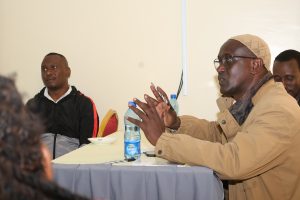
Speaking during the public hearing on the Judiciary’s proposed budget for the Financial Year 2027/28, Radio Jangwani Managing Director Denson Machuki thanked the institution for taking the consultations to the people, noting that such engagement is not common.
“It is not usual that you come for public hearings everywhere. It is not common. It happens with the politicians, the county government and national government,” said Mr Machuki.
He asked the Judiciary to include a budget line for a follow-up forum in Marsabit, so that it cannot cite lack of funds as a reason for not returning.
“You add a budget to yourself so that you do this next year here in Marsabit. That is so that you don’t say hakuna budget next year, so you don’t come to Marsabit,” he said.
Mr Machuki said the return visit should allow the Judiciary to give feedback on the proposals received this year and explain what it had done by then. Residents, he said, would use the opportunity to check whether their proposals had been included in the budget and, if not, to demand reasons.
“When you come here next year, we hold you accountable. We propose this. Is it in the budget? If it’s not, why?” he asked.
He added that the approach would help communities determine whether such public hearings add value, similar to those held by some county governments across the country.
In a second proposal, Mr Machuki called on the Judiciary to do more to educate communities on what happens in court, saying many people do not know that they can get justice through the courts.
He urged the institution to invest more in engaging communities on the ground, rather than only from Nairobi, including working with local media, so that residents understand that they can seek justice in court if they fail to get it within the community.
Mr Machuki said language and the cost of legal representation remain barriers for many people who go to court.
“Kwa sababu kuna watu hawana uwezo wa kupata wakili. Kuongea English kubwa kubwa kotini, wananchi hawaelewi wanasema nini,” he said, pointing to those who cannot afford a lawyer and struggle to follow court proceedings conducted in English.












Post Comment