











Digital literacy and critical thinking training equips Marsabit youth to end misinformation and counter fake news
By Nangori Silvio
Digital literacy and critical thinking are giving young people in Marsabit County the tools to distinguish facts from misleading and false information online as the country heads into the 2027 election season.
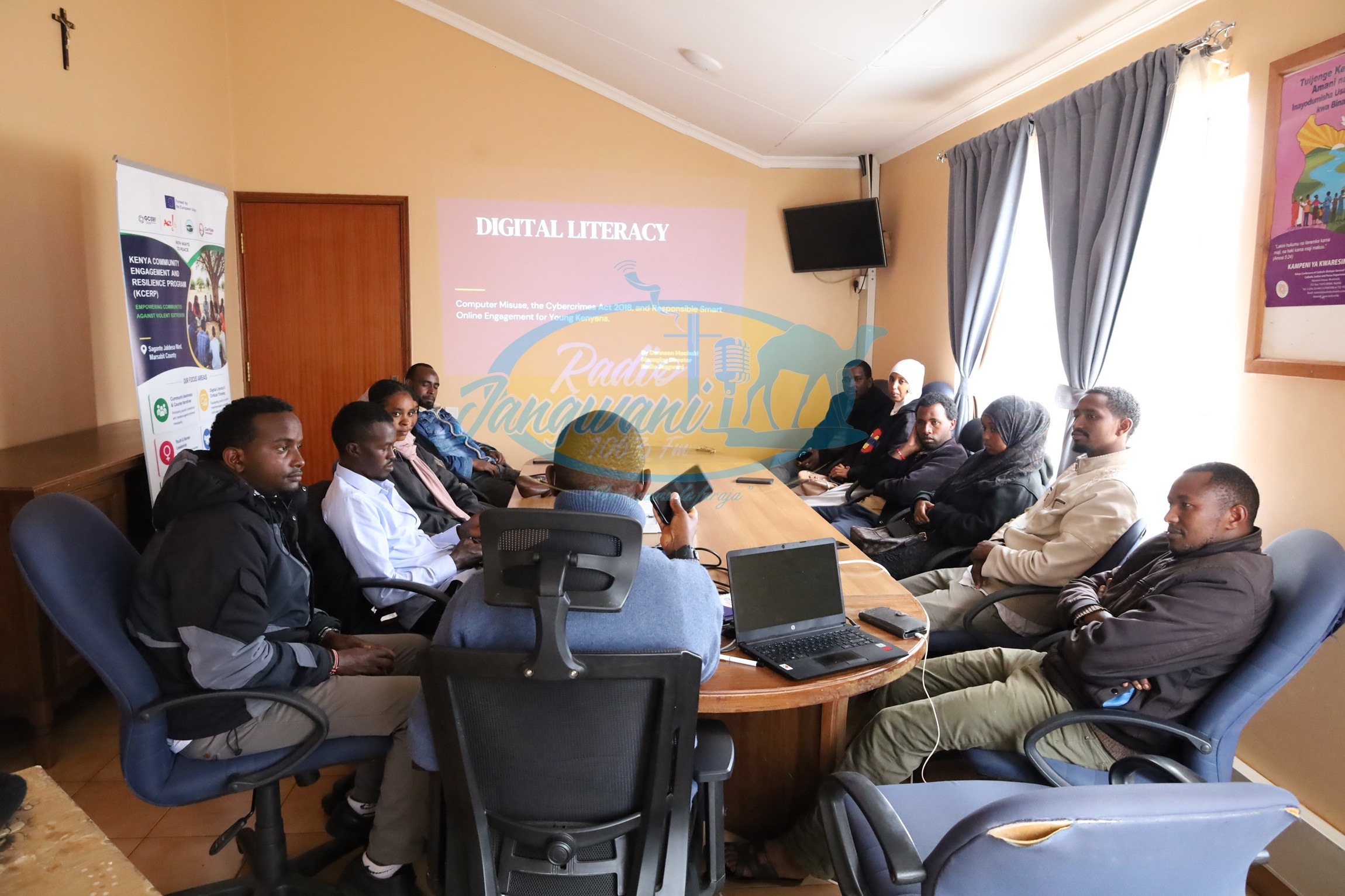
Youth from Sagante Jaldesa Ward in Saku Constituency said this after a two-day training funded by the European Union through the Global Community Engagement and Resilience Fund (GCERF) and Act Change Transform. The programme is being implemented by Caritas Marsabit.
The training was facilitated by Denson Machuki, the Managing Director of Radio Jangwani. He took the participants through digital literacy, critical thinking, misinformation, fake news, verification and fact-checking online, equipping them with practical skills to assess the content they meet on social media before believing it or passing it on.
The youth said the sessions taught them to pause and question what they see online before reacting to it.
“We have learned that we should not react in a hurry. We should not comment, and we should not share, because you do not even know the intention of the person who posted that message,” said Jillo Boru, one of the participants.
Another participant, Halkano Gufu, said the lesson is especially urgent in the Gen Z era, when self-styled bloggers spread unverified claims.
“These days, in this Gen Z generation, we have people who call themselves bloggers. Someone just sits somewhere and spreads a message that may not be true,” he said.
John Boru from Goru Rukesa urged his peers to verify information before sharing it.
“Let us confirm before we share, so that we stop the spread of false information and keep peace during the elections,” he said.
Misinformation, which is false content shared without the intention to deceive, can spread quickly during election periods, when emotions run high and communities are eager for news. Fact-checking, the practice of confirming a claim against reliable sources before believing or sharing it, is one of the simplest ways to stop it.
The youth also raised concern about how politicians use young people, particularly on social media.
“Young people are often used by politicians. They give us money so that we share their videos online. But another young person may not support that politician, and then the youth end up fighting each other. Sometimes politicians are behind all this,” said Guyatu Roba, another participant.
Such manipulation shows why critical thinking matters among the youth in Marsabit. Online spaces can also expose young people to extremist messaging and to cybercrime such as scams and fraud. Digital literacy helps them recognise these risks before they fall victim.
Machuki urged the youth to be careful on social media so as not to spread false information. He said responsible use of social media can help protect peace, strengthen accountability and ensure residents receive accurate information.
He also took the participants through the legal side of misinformation, cautioning them that what they post online can have consequences.
Kenya’s law on false information has changed this year. On 6 March 2026, the Court of Appeal declared sections 22 and 23 of the Computer Misuse and Cybercrimes Act (2018) unconstitutional. These sections criminalised publishing false or misleading information.
Section 22 covered intentionally publishing false, misleading or fictitious data so that it would be taken as authentic, punishable by a fine of up to Sh5 million, up to two years in prison, or both. Section 23 covered knowingly publishing false information that results in panic, chaos or violence, or damages a reputation, punishable by a fine of up to Sh5 million, up to 10 years in prison, or both.
The judges said the provisions were too broad and could catch innocent people, including those who share a message without knowing it is untrue.
The ruling does not give social media users a free pass. The Constitution still allows limits on false information that propagates war, incites violence or amounts to hate speech, and the National Cohesion and Integration Act already criminalises hate speech. A person can also be sued for defamation over false statements that harm their reputation. Other parts of the cybercrime law, including those on unauthorised interference with computer systems and unlawful interception of data, remain in force.
The Director of Public Prosecutions and the National Assembly have appealed the decision to the Supreme Court, so the legal position could still change.
The training comes as other programmes in the county work to keep young people away from violent extremism.
Earlier in August, Caritas Marsabit facilitated a two-day Structured Joint Community Dialogue that brought community members and law enforcement actors together to strengthen collaboration in preventing and countering violent extremism. The dialogue focused on trust, early warning and response, youth engagement, information sharing and community resilience.
It was implemented under the Kenya Community Engagement and Resilience Programme (KCERP), co-implemented by Act Change Transform and funded by the European Union through GCERF, the Lead Implementing Partner.













Post Comment